
Housing Rebound Begins
Housing Rebound Begins
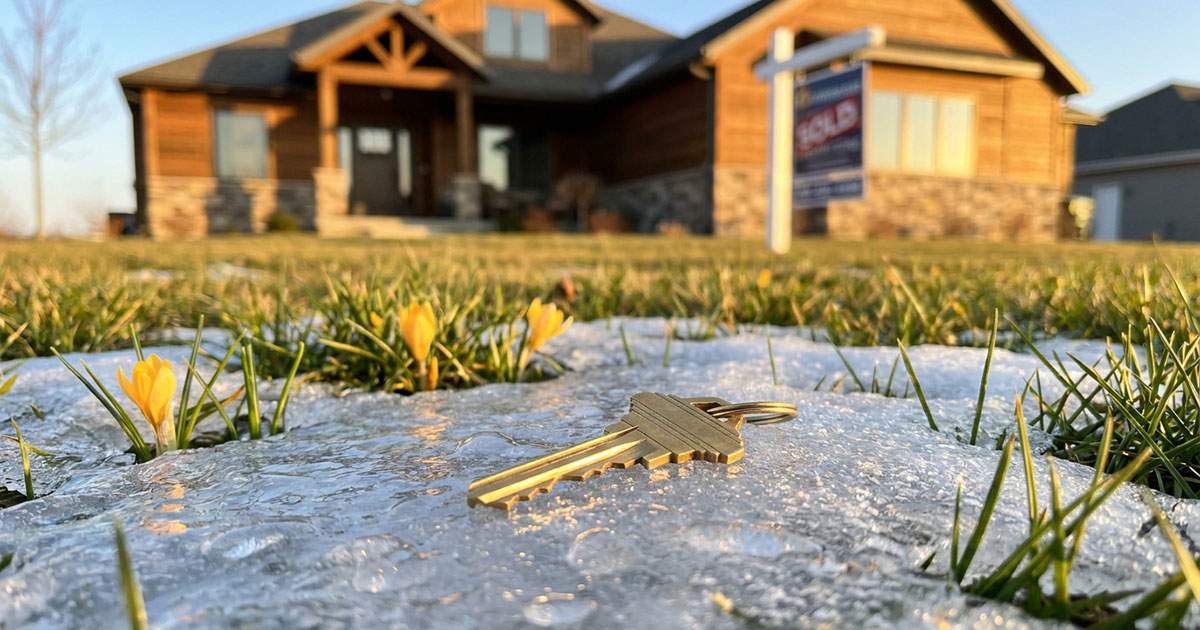
The United States housing market is experiencing a significant resurgence as pending home sales climb, signaling a release of long-held pent-up demand. This shift indicates that buyers are finally acclimating to current mortgage rates and choosing to move forward with life transitions. Our analysis explores what these rising contract signings mean for inventory, pricing, and the market’s future.
Understanding the Surge in Pending Sales
Pending home sales serve as the most reliable leading indicator for the health of the residential real estate market because they represent the very moment a buyer and seller reach a mutual agreement. While closed sales provide a retrospective look at the market from two months prior, a rise in pending transactions signals an immediate shift in consumer confidence and market velocity. As we progress through the spring of 2026, the recent uptick in contract signings suggests that the period of stagnation defined by high interest rates and hesitant participants is finally drawing to a close. This increase is not merely a statistical anomaly but a reflection of a broader psychological shift among American consumers who have grown weary of putting their lives on hold. When we see a consistent rise in these figures, it tells us that the gap between buyer expectations and seller demands is narrowing, allowing for a more fluid exchange of property. This momentum is essential for the ecosystem because it encourages more sellers to list their homes, knowing that there is a ready pool of qualified buyers waiting to engage. Consequently, the current trajectory of pending sales is the clearest evidence yet that the market is beginning to thaw after a long and restrictive winter.
Adapting to the New Financial Reality
The primary catalyst for this renewed activity is the gradual stabilization and slight decline of mortgage interest rates, which have hovered around the six percent mark in recent weeks. For several years, the market was paralyzed by a collective shock as rates climbed from historic lows to figures not seen in decades, but the current environment suggests that the “new normal” has been accepted. Buyers who were once holding out for a return to three percent interest rates have realized that such levels were a historical outlier rather than a standard benchmark. This acceptance has transformed the buyer’s strategy from one of avoidance to one of calculated entry, where the focus has shifted toward finding the right property and planning for future refinancing opportunities. Financial institutions have also become more creative in this environment, offering various buy-down programs and adjustable-rate products that help bridge the affordability gap for first-time homeowners. The stability of the current rate environment, even at these higher levels, provides a sense of predictability that was missing during the volatile swings of the previous two years. As a result, the increase in pending sales is a direct byproduct of a consumer base that has finally recalibrated its financial expectations to match the reality of the 2026 economic landscape.
The Breaking Point of Pent-Up Demand
Pent-up demand is often discussed in abstract economic terms, but in the real estate sector, it is a deeply personal phenomenon driven by unavoidable life transitions. For nearly three years, millions of Americans deferred major life decisions, such as getting married, starting families, or relocating for career advancement, specifically because of the unfavorable housing market. However, there is a natural limit to how long these transitions can be delayed before the pressure of a growing household or a professional necessity outweighs the desire for a lower interest rate. We are currently witnessing the “breaking point” of this demand, where the biological and professional clocks have overtaken financial caution. This surge is particularly evident among the millennial generation, who are now in their prime home-buying years and are increasingly unwilling to remain in rental properties or cramped living situations. This demographic pressure creates a solid floor for the housing market, ensuring that demand remains robust even when external economic factors are less than ideal. The rising number of pending sales is the physical manifestation of these accumulated life goals finally being put into motion, creating a powerful wave of activity that is likely to sustain the market through the remainder of the year.
Inventory Dynamics and Competitive Pressures
While the rise in pending sales is a positive sign for market health, it also highlights the persistent challenge of limited inventory that continues to define the American real estate landscape. Even as more buyers enter the fray, the supply of available homes has not kept pace, leading to a resurgence of competitive bidding in many high-demand metropolitan areas. This scarcity is partially due to the “lock-in effect,” where many potential sellers remain hesitant to trade their existing low-interest mortgages for new ones at current rates, though this resistance is starting to soften as home equity reaches record highs. When pending sales increase in a low-inventory environment, it inevitably puts upward pressure on prices, making it a “sellers’ market” in many regions despite the higher borrowing costs. For buyers, this means that the window of opportunity to negotiate significant discounts is closing in many popular neighborhoods. The speed at which homes are going under contract—often in less than ten days for well-priced properties—requires a level of preparation and decisiveness that was not as critical a year ago. This environment rewards those who have their financing fully secured and are willing to act quickly, further accelerating the velocity of the market and contributing to the rising pending sales data we are seeing today.
Regional Divergence and Market Velocity
It is important to recognize that the resurgence in pending sales is not distributed equally across the United States, as we are seeing a significant geographic divergence in market behavior. In the Northeast and parts of the Midwest, inventory remains exceptionally tight, and the increase in pending sales is often limited only by the number of homes available for purchase, leading to intense competition and rapid price appreciation. Conversely, in some Southern and Western markets that saw explosive growth during the early 2020s, the increase in pending sales is more moderate as the market undergoes a period of price correction and stabilization. These regional differences are crucial for both buyers and sellers to understand, as the national narrative of a “thawing market” may manifest very differently in a suburb of Seattle compared to a neighborhood in Atlanta. In areas where pending sales are rising most sharply, sellers have the leverage to demand cleaner offers with fewer contingencies, while in cooling markets, buyers still find opportunities for seller concessions and more deliberate timelines. This fragmentation means that real estate is becoming increasingly localized, requiring participants to look beyond national headlines and focus on the specific supply-demand dynamics of their immediate community to make informed decisions.
Strategic Outlook for the Coming Months
The current trend of increasing pending sales serves as a definitive signal that the US housing market has moved past its most restrictive phase and is entering a new chapter of active engagement. For sellers, this is the most opportune time in years to list a property, as the influx of buyers who have been waiting on the sidelines ensures a high level of interest for well-maintained homes. For buyers, the message is one of persistence and preparation; while the market is more active, the increase in choices and the stability of rates provide a clearer path to homeownership than what was available during the height of the recent inflation crisis. As we look toward the second half of 2026, the continued release of pent-up demand will likely keep the market’s momentum strong, provided that the broader economy avoids major shocks. The primary takeaway from the rising number of contract signings is that the American dream of homeownership remains a central priority for the public, and the market’s current resilience is a testament to the enduring value of real estate as both a financial asset and a cornerstone of personal stability. Navigating this environment requires a balance of urgency and patience, but the data clearly indicates that the doors of the housing market are swinging open once again.
Jack C Bharat
Minority-Owned Business Enterprise (MBE) Certified with NYC
122-15 111th Avenue, S Ozone Park, NY 11420
Email: jackcbharat@gmail.com
Phone: (718) 805-6982
Jack C Bharat has been in the Real Estate Business since 2003. As a Realtor & Developer, his experience in buying dated, distress or fixer upper and renovated them back for resale can help both buyers and sellers in their transactions. Graduated in 1999 from Queens College (CUNY) Flushing, with a Bachelors Degree and in 2012 from LaGuardia College with Goldman Sachs 10K Small Business Certificate Of Entrepreneurship, Mr Bharat is always educating himself to stay current and sometimes ahead of Real Estate Market Trends. He is currently a Notary Public in the State of NY as well. Mr Bharat has completed real estate projects in NY-Queens & Long Island, Florida-Ocala & Coral Springs & recently Providence Guyana (2023) 8units apt residential and currently working on a Mix Use 3 Story Commercial Building on Moca & Heroes Hwy @ Providence Guyana. His passion for creating projects that blends functional modern architectural design in harmony with the natural environment are evident in all his projects. Mr Bharat is also the CEO of Liberty Office Supplies & Equipment, Inc. A Certified Minority Business Enterprise (MBE) with NYC & NYS. Est in May 1999, Liberty provides a wide range of office supplies and works as a sourcing company for the Federal Govt by being a GSA Schedule MAS Holder.
Jack is Licensed as a Real Estate Broker in State of New York and in the State of Florida. He has knowledge in both residential and commercial sales. His motto “Working with Clients to achieve their real estate goals” is what drive him to be on top of his game”. He is very involved in his community especially with social and educational issues. He is the proud sponsor of a local Cricket Team, Boxing and donates his time and money to various organizations that work with children, abuse victims and the elderly. He is a member of the Jamaica Rotary Club & The Free Mason Lodge of NY. He is cited by NYC Mayor’s Office, NYS Assembly and NYC Council for his leadership role in his community.
Mr Bharat has three daughters: Alicia who graduated with her Masters Of Science in Education from Queens College and is now a STEM Teacher with the NYC Dept of Education & a second Masters in Public Admin in May 2026, Kayla who has graduated (2024) from CUNY School for Public Health with her Masters of Public Health in Environmental & Occupational Health Sciences & works as an Environmental Health & Safety Specialist with Sloan Kettering Cancer Ctr. and Jessica recently graduated (2025) from Queens College and currently pursing her goals in the Dental Field.
Jack is Licensed as a Real Estate Broker in State of New York and in the State of Florida. He has knowledge in both residential and commercial sales. His motto “Working with Clients to achieve their real estate goals” is what drive him to be on top of his game”. He is very involved in his community especially with social and educational issues. He is the proud sponsor of a local Cricket Team, Boxing and donates his time and money to various organizations that work with children, abuse victims and the elderly. He is a member of the Jamaica Rotary Club & The Free Mason Lodge of NY. He is cited by NYC Mayor’s Office, NYS Assembly and NYC Council for his leadership role in his community.
Mr Bharat has three daughters: Alicia who graduated with her Masters Of Science in Education from Queens College and is now a STEM Teacher with the NYC Dept of Education & a second Masters in Public Admin in May 2026, Kayla who has graduated (2024) from CUNY School for Public Health with her Masters of Public Health in Environmental & Occupational Health Sciences & works as an Environmental Health & Safety Specialist with Sloan Kettering Cancer Ctr. and Jessica recently graduated (2025) from Queens College and currently pursing her goals in the Dental Field.