
New Construction Price Lows
New Construction Price Lows
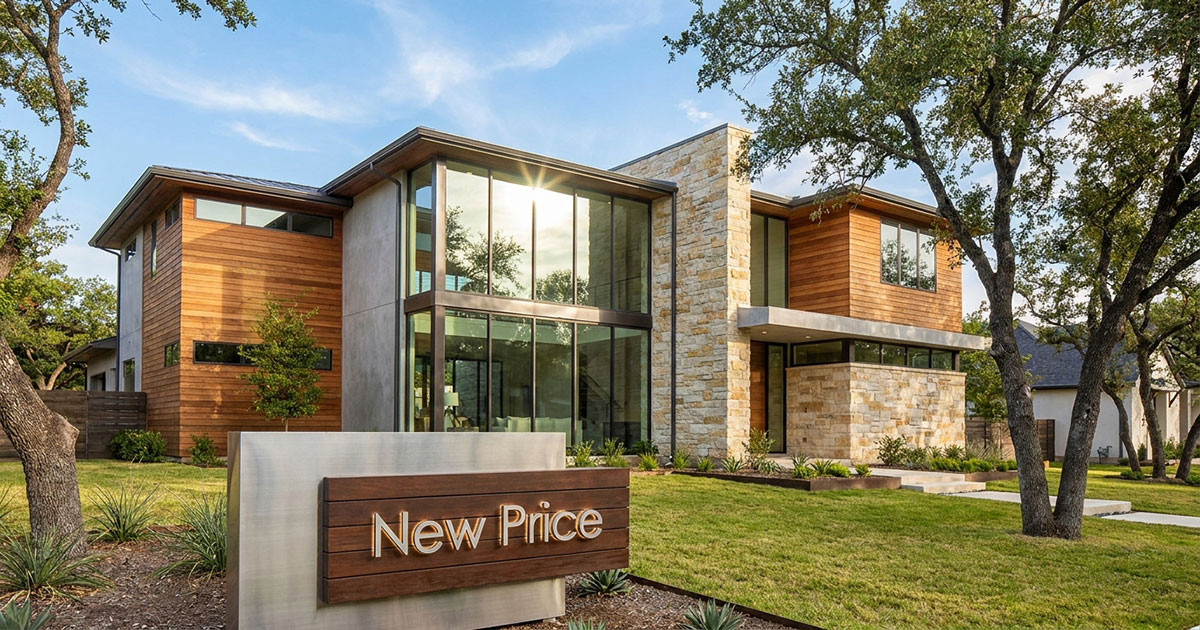
The American new construction market is currently experiencing a significant shift as prices for newly built homes drop to their lowest levels since 2021. Builders are aggressively offering incentives and price cuts to move inventory amidst fluctuating interest rates. This creates a rare window for buyers to purchase modern homes at five-year lows while securing advantageous financing terms today.
The Current State of New Home Pricing
The United States housing market is witnessing a remarkable correction in the sector of new constructions, providing a stark contrast to the frantic bidding wars that characterized the early years of the current decade. According to the latest data from major housing authorities and market analysis firms, the median sales price for new houses has retreated to levels not seen since the summer of 2021. This downward pressure on pricing is a direct response to a complex tapestry of economic factors, including the normalization of supply chains and a significant increase in completed inventory that has finally reached the market after years of construction delays. For the first time in several years, the balance of power is shifting away from developers and toward the individual buyer, as the stockpile of finished but unsold homes continues to grow across various regions. This surplus is forcing builders to rethink their pricing strategies entirely, moving away from record-breaking premiums and toward more realistic valuations that reflect the current purchasing power of the average American family. While the existing home market remains tight due to the lock-in effect of low mortgage rates held by current owners, the new build sector is operating under a different set of rules where liquidity and sales velocity are paramount for corporate balance sheets. Consequently, the price per square foot on new projects has become increasingly competitive, often narrowing the gap between a brand-new residence and a decades-old property requiring significant maintenance.
Strategic Incentives and Financial Manoeuvres
Beyond the simple reduction in the sticker price of these properties, developers are increasingly relying on sophisticated financial concessions to attract qualified buyers in a high-interest-rate environment. One of the most prevalent and effective tools currently being utilized is the mortgage rate buy-down, where the builder pays an upfront fee to the lender to permanently or temporarily lower the buyer’s interest rate. This practice effectively provides a massive discount that is not always immediately visible in the public sales price but results in hundreds of dollars in monthly savings for the homeowner. In addition to interest rate subsidies, many large-scale national builders are now offering to cover all closing costs, a move that significantly reduces the amount of cash a buyer needs to bring to the table. These incentives are often bundled with high-end interior upgrades, such as premium appliances, quartz countertops, and smart home technology, which are being included at no additional cost to ensure a quick sale. The prevalence of these “hidden” discounts means that the effective price of a new home is actually much lower than the reported median sales data suggests, making it a highly opportunistic time for those who have been waiting on the sidelines for a market cooling. Buyers who engage with builders today are finding themselves in a position to negotiate not just on the price, but on the entire package of the home, transforming what was once a take-it-or-leave-it transaction into a collaborative negotiation.
Inventory Expansion and Regional Opportunities
The geographical landscape of this pricing low is particularly interesting, with the most significant deals appearing in the Sun Belt and Western states where construction activity was most intense over the last five years. In markets like Texas, Florida, and Arizona, the sheer volume of new housing starts has led to a temporary glut of inventory, prompting builders to launch massive summer sales events to clear their ledgers. This surge in availability is a result of builders incorrectly projecting that the pandemic-era demand would remain permanent, leading to a massive wave of completions just as mortgage rates began their ascent. Now that these homes are ready for occupancy, the carrying costs for developers are mounting, which creates a sense of urgency that buyers can leverage. Unlike the existing home market, where sellers might choose to simply delist their property if they do not get their desired price, institutional builders must move their products to satisfy shareholders and fund future projects. This fundamental difference in motivation is the primary driver behind the current five-year price low and is unlikely to persist indefinitely as builders have already started to pull back on new permits to tighten future supply. The current moment represents a convergence of high completion rates and builder desperation that is unlikely to repeat once the current backlog of homes is absorbed by the market.
Modern Advantages and Energy Efficiency
Purchasing at this five-year low does not just offer financial benefits but also provides access to the latest advancements in building science and residential technology that older homes simply cannot match. New constructions today are built under much stricter energy codes than those of even a decade ago, featuring superior insulation, high-efficiency HVAC systems, and advanced windows that drastically reduce utility costs. As the cost of energy continues to rise across the United States, the long-term value of an energy-efficient home becomes a major factor in the total cost of ownership. Many buyers are realizing that while an older home might seem cheaper on the surface, the combined cost of a mortgage and high utility bills often exceeds the cost of a brand-new, efficient house purchased with a builder-subsidized interest rate. Furthermore, new homes come with comprehensive warranties that protect the owner from major repairs for several years, providing a level of financial predictability that is invaluable in a volatile economy. The peace of mind that comes with knowing the roof, the plumbing, and the electrical systems are all under warranty adds a layer of value that further justifies the investment at this current price point. When you factor in the reduced maintenance requirements and the modern layouts designed for contemporary lifestyles, the value proposition of a new build in today’s market becomes undeniably strong for both primary residents and long-term investors.
Conclusion and Market Outlook
The opportunity to acquire a new construction at a five-year price low is a rare alignment of economic forces that signals a unique turning point for the American real estate landscape. While the future of interest rates remains a topic of intense debate among economists, the tangible reduction in base prices and the abundance of builder concessions offer a concrete margin of safety for today’s buyers. It is crucial to understand that the current inventory surplus is a finite phenomenon, as developers have already begun scaling back new projects to ensure that supply does not exceed demand in the coming years. Those who act during this window are likely to look back at this period as a moment when they were able to secure a premium asset at a significant discount relative to replacement costs. As the market eventually stabilizes and the current backlog of homes is sold off, the upward pressure on prices is expected to return, driven by the persistent national housing shortage and the inevitable cooling of construction activity. Therefore, for the savvy buyer or seller looking to navigate the US market, the present emphasis should be on recognizing the transient nature of these discounts and the immense value found in the new construction sector before the next cycle of price appreciation begins.
Jack C Bharat
Minority-Owned Business Enterprise (MBE) Certified with NYC
122-15 111th Avenue, S Ozone Park, NY 11420
Email: jackcbharat@gmail.com
Phone: (718) 805-6982
Jack C Bharat has been in the Real Estate Business since 2003. As a Realtor & Developer, his experience in buying dated, distress or fixer upper and renovated them back for resale can help both buyers and sellers in their transactions. Graduated in 1999 from Queens College (CUNY) Flushing, with a Bachelors Degree and in 2012 from LaGuardia College with Goldman Sachs 10K Small Business Certificate Of Entrepreneurship, Mr Bharat is always educating himself to stay current and sometimes ahead of Real Estate Market Trends. He is currently a Notary Public in the State of NY as well. Mr Bharat has completed real estate projects in NY-Queens & Long Island, Florida-Ocala & Coral Springs & recently Providence Guyana (2023) 8units apt residential and currently working on a Mix Use 3 Story Commercial Building on Moca & Heroes Hwy @ Providence Guyana. His passion for creating projects that blends functional modern architectural design in harmony with the natural environment are evident in all his projects. Mr Bharat is also the CEO of Liberty Office Supplies & Equipment, Inc. A Certified Minority Business Enterprise (MBE) with NYC & NYS. Est in May 1999, Liberty provides a wide range of office supplies and works as a sourcing company for the Federal Govt by being a GSA Schedule MAS Holder.
Jack is Licensed as a Real Estate Broker in State of New York and in the State of Florida. He has knowledge in both residential and commercial sales. His motto “Working with Clients to achieve their real estate goals” is what drive him to be on top of his game”. He is very involved in his community especially with social and educational issues. He is the proud sponsor of a local Cricket Team, Boxing and donates his time and money to various organizations that work with children, abuse victims and the elderly. He is a member of the Jamaica Rotary Club & The Free Mason Lodge of NY. He is cited by NYC Mayor’s Office, NYS Assembly and NYC Council for his leadership role in his community.
Mr Bharat has three daughters: Alicia who graduated with her Masters Of Science in Education from Queens College and is now a STEM Teacher with the NYC Dept of Education & a second Masters in Public Admin in May 2026, Kayla who has graduated (2024) from CUNY School for Public Health with her Masters of Public Health in Environmental & Occupational Health Sciences & works as an Environmental Health & Safety Specialist with Sloan Kettering Cancer Ctr. and Jessica recently graduated (2025) from Queens College and currently pursing her goals in the Dental Field.
Jack is Licensed as a Real Estate Broker in State of New York and in the State of Florida. He has knowledge in both residential and commercial sales. His motto “Working with Clients to achieve their real estate goals” is what drive him to be on top of his game”. He is very involved in his community especially with social and educational issues. He is the proud sponsor of a local Cricket Team, Boxing and donates his time and money to various organizations that work with children, abuse victims and the elderly. He is a member of the Jamaica Rotary Club & The Free Mason Lodge of NY. He is cited by NYC Mayor’s Office, NYS Assembly and NYC Council for his leadership role in his community.
Mr Bharat has three daughters: Alicia who graduated with her Masters Of Science in Education from Queens College and is now a STEM Teacher with the NYC Dept of Education & a second Masters in Public Admin in May 2026, Kayla who has graduated (2024) from CUNY School for Public Health with her Masters of Public Health in Environmental & Occupational Health Sciences & works as an Environmental Health & Safety Specialist with Sloan Kettering Cancer Ctr. and Jessica recently graduated (2025) from Queens College and currently pursing her goals in the Dental Field.